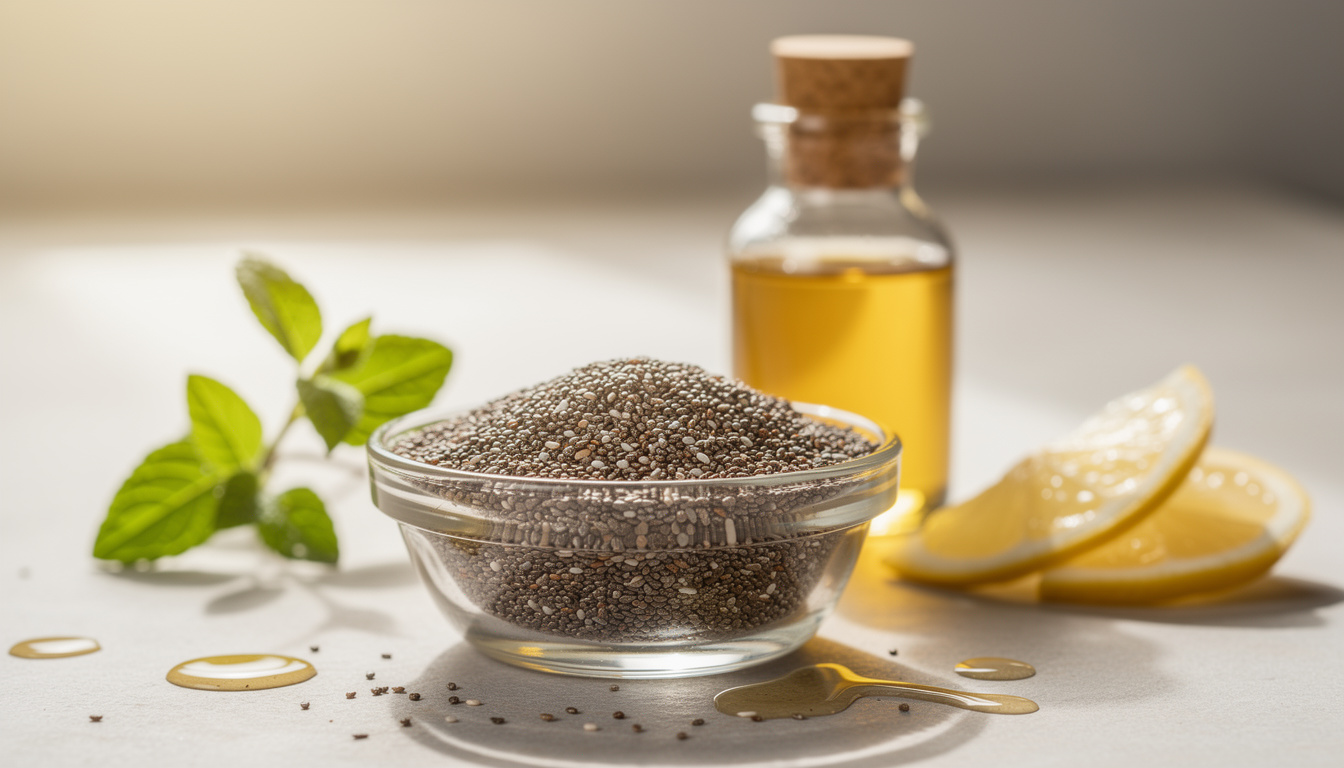
Long renowned as a superfood, chia seeds continue to captivate thanks to their numerous health benefits, notably their positive effect on digestion, their richness in omega-3s, and their ability to provide lasting natural energy. Originating from Central America, these small black seeds hide an impressive nutritional treasure.
Chia seeds and digestion: a winning duo for intestinal health
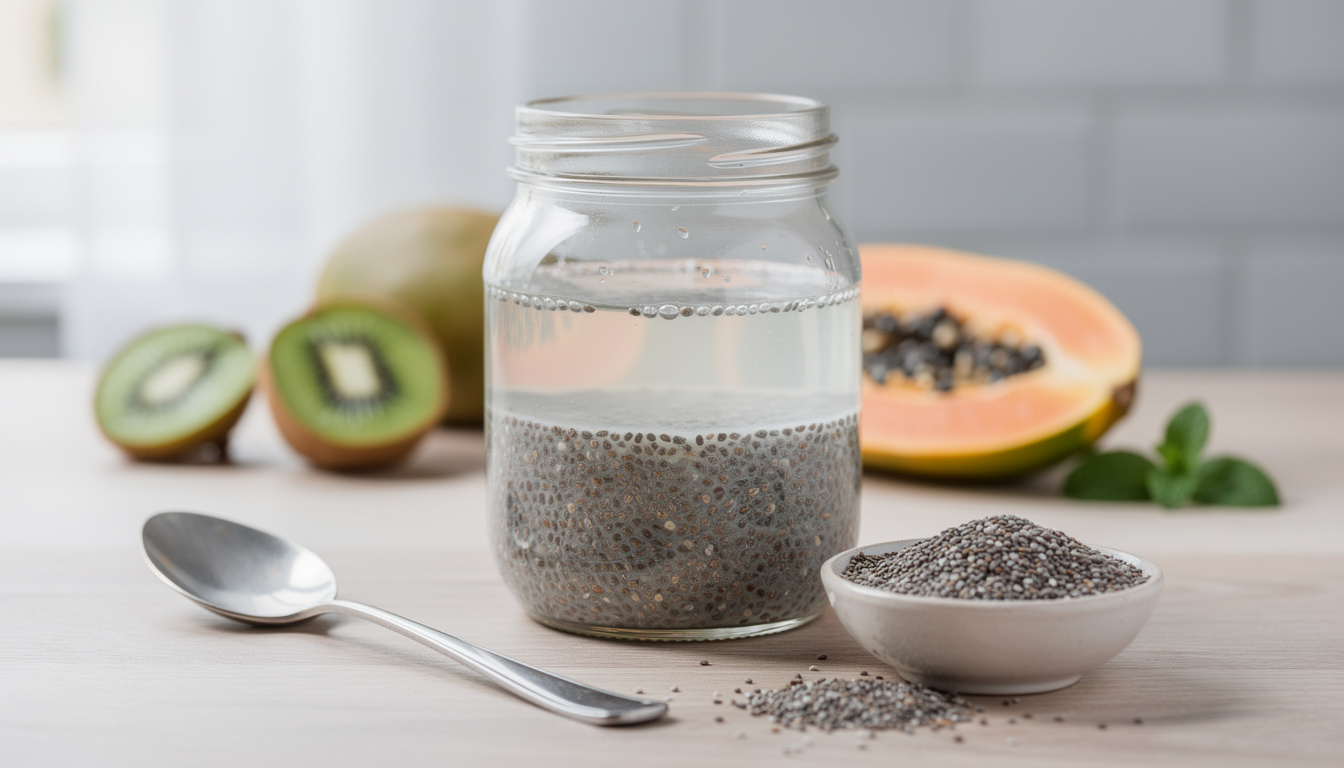
Digestion can sometimes cause discomfort, and adjusting our diet is often the key to improving intestinal comfort. Chia seeds, due to their high dietary fiber content, play a major role here. When soaked in water or a liquid, they swell, forming a gel that facilitates intestinal transit by increasing stool volume while retaining water in the intestine. This helps prevent constipation and maintain a balanced intestinal flora.
For those with a sensitive digestive system, gradually incorporating these seeds is advised to avoid any initial discomfort. In the world of superfoods, chia seeds stand out by providing not only soluble and insoluble fibers but also a soothing effect on the intestinal level.
A natural boost against digestive troubles
In some people, regular consumption of chia seeds has helped alleviate digestive discomfort symptoms, notably thanks to the anti-inflammatory properties of their nutrients. These characteristics help limit irritation of the intestinal mucosa, thus promoting an environment conducive to digestion.
Omega-3 and essential fatty acids: a hidden treasure in chia seeds
Omega-3s, renowned for their cardiovascular and anti-inflammatory virtues, are essential for the proper functioning of many bodily functions. Chia seeds are an interesting plant-based source, notably due to their alpha-linolenic acid (ALA) content, an essential fatty acid that the body cannot produce.
As part of a balanced diet, favoring plant-based omega-3s is an alternative not to be overlooked, especially for people following a vegetarian or vegan diet. Regular consumption of these seeds helps maintain healthy inflammation levels and promotes better overall health.
The anti-inflammatory role of chia seeds
The combined action of omega-3s and dietary fibers often results in a reduction of inflammatory markers in the body. This effect is particularly interesting for people suffering from conditions such as osteoarthritis or other chronic inflammations, as can be seen in natural approaches to soothe hip osteoarthritis.
Natural energy: how chia seeds boost daily vitality
Beyond their nutritional contributions, chia seeds are a true ally for those looking to stabilize their energy throughout the day. Their ability to slowly release carbohydrates helps avoid blood sugar spikes and offers a longer-lasting feeling of fullness.
This property is particularly appreciated at breakfasts or as a snack before physical activity, thus promoting optimal shape and endurance. This type of diet fits well within a preventive approach against chronic fatigue, a topic widely covered in advice for a protein-rich anti-fatigue brunch.
Nutrients that make a difference
Chia seeds also provide quality plant-based proteins, calcium, and magnesium, essential elements for supplying energy and supporting muscle function. These nutrients contribute to physical performance but also to general well-being.
| Nutrient | Amount per 28 g (about 2 tbsp) | Main role |
|---|---|---|
| Dietary fibers | 11 g | Improves digestion, intestinal health |
| Omega-3 (ALA) | 5 g | Anti-inflammatory, heart health |
| Proteins | 4.5 g | Energy source, muscle repair |
| Calcium | 179 mg | Bone support |
| Magnesium | 95 mg | Vitality, nervous and muscular function |
Incorporating chia seeds into your daily diet
If chia seeds possess remarkable qualities, one must still know how to consume them to reap all the benefits. They can be easily added to various dishes: smoothie bowls, porridges, yogurts, or even in savory recipes. Their neutral flavor facilitates their integration, while their gelatinous texture when hydrated adds variety to preparations.
To fully benefit from their positive effects on digestion and natural energy, it is generally recommended to consume them after soaking, thereby avoiding any risk of obstruction and optimizing nutrient absorption. This habit finds an interesting echo in the use of protein-rich fermented dairy products like skyr, which also contributes to a complete nutritional balance.
{“@context”:”https://schema.org”,”@type”:”FAQPage”,”mainEntity”:[{“@type”:”Question”,”name”:”What quantity of chia seeds can one consume per day?”,”acceptedAnswer”:{“@type”:”Answer”,”text”:”It is recommended to consume about 15 to 30 grams of chia seeds per day, ensuring they are properly soaked to facilitate digestion.”}},{“@type”:”Question”,”name”:”Are chia seeds suitable for people with allergies?”,”acceptedAnswer”:{“@type”:”Answer”,”text”:”Allergies to chia seeds are rare, but it is advisable to start with a small amount to detect any possible reaction, especially if you have allergies to seeds or nuts.”}},{“@type”:”Question”,”name”:”Can chia seeds be considered a natural energizer?”,”acceptedAnswer”:{“@type”:”Answer”,”text”:”Yes, thanks to their balanced composition of fibers, proteins, and omega-3s, chia seeds provide gradual and sustained energy without the spikes associated with fast sugars.”}},{“@type”:”Question”,”name”:”How do chia seeds help intestinal health?”,”acceptedAnswer”:{“@type”:”Answer”,”text”:”They promote transit by increasing stool volume thanks to soluble and insoluble dietary fibers, while having an anti-inflammatory effect beneficial to the intestinal mucosa.”}},{“@type”:”Question”,”name”:”Can chia seeds replace omega-3 supplements?”,”acceptedAnswer”:{“@type”:”Answer”,”text”:”They are an interesting natural source of omega-3s, but for specific needs, especially in EPA and DHA, it is sometimes necessary to supplement with other food sources or supplements.”}}]}What quantity of chia seeds can one consume per day?
It is recommended to consume about 15 to 30 grams of chia seeds per day, ensuring they are properly soaked to facilitate digestion.
Are chia seeds suitable for people with allergies?
Allergies to chia seeds are rare, but it is advisable to start with a small amount to detect any possible reaction, especially if you have allergies to seeds or nuts.
Can chia seeds be considered a natural energizer?
Yes, thanks to their balanced composition of fibers, proteins, and omega-3s, chia seeds provide gradual and sustained energy without the spikes associated with fast sugars.
How do chia seeds help intestinal health?
They promote transit by increasing stool volume thanks to soluble and insoluble dietary fibers, while having an anti-inflammatory effect beneficial to the intestinal mucosa.
Can chia seeds replace omega-3 supplements?
They are an interesting natural source of omega-3s, but for specific needs, especially in EPA and DHA, it is sometimes necessary to supplement with other food sources or supplements.