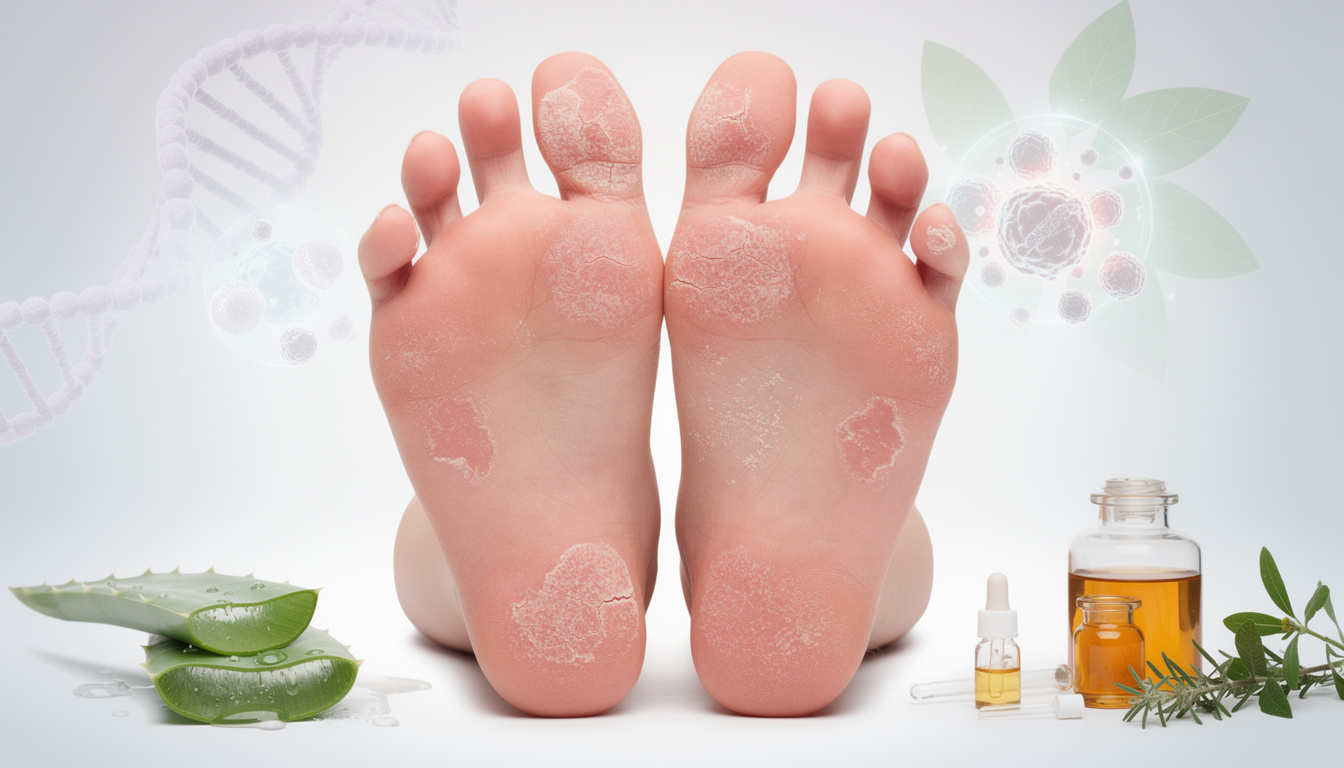
Understanding Palmoplantar Psoriasis: Causes and Skin Inflammation
Palmoplantar psoriasis is a particular form of psoriasis that specifically affects the palms of the hands and the soles of the feet. It manifests as chronic skin inflammation, resulting in the appearance of thick, red, scaly plaques that can greatly disrupt daily life.
This condition is the result of a complex interaction between various psoriasis causes, including genetic factors, a faulty immune response, and several environmental elements. For example, intense stress, certain skin traumas, or infections can trigger or worsen these lesions. It is essential to understand that this disease is not contagious, which often alleviates concerns about its transmission.
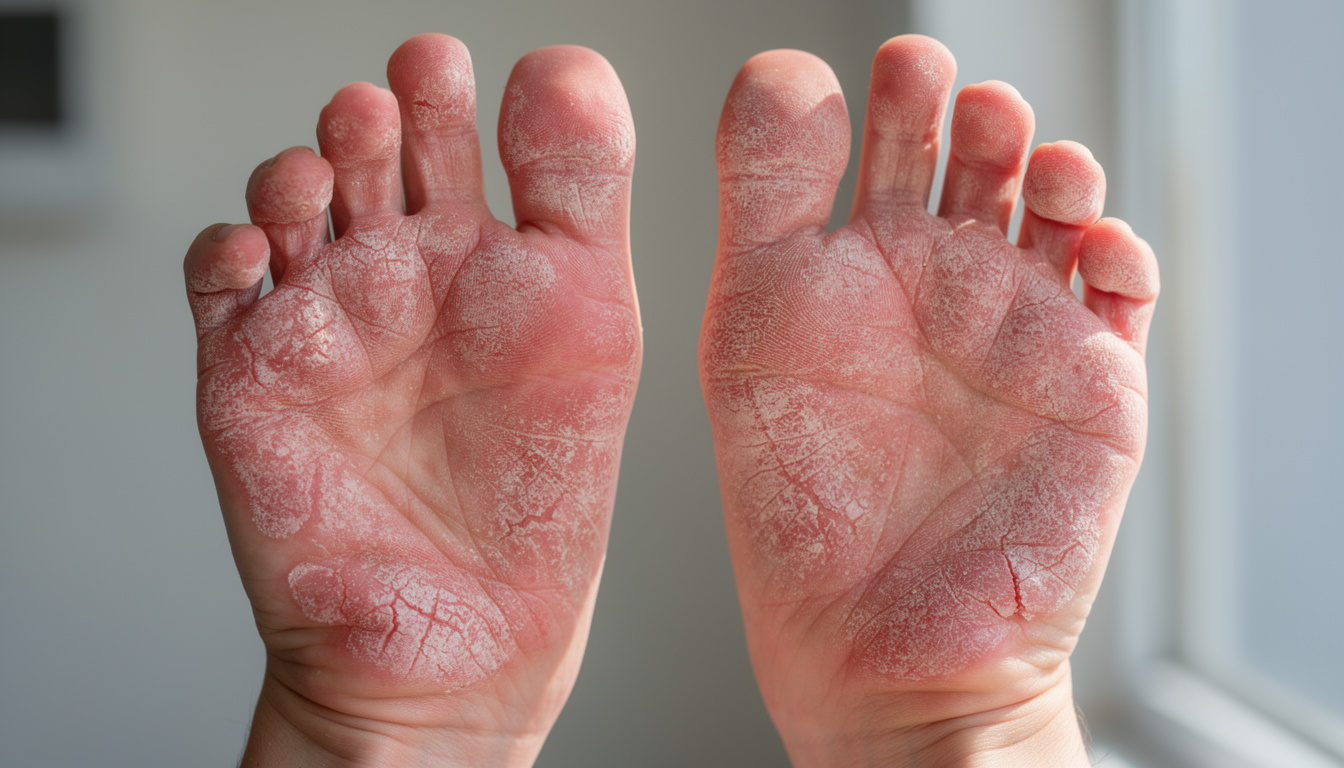
The psoriasis signs of palmoplantar psoriasis: recognizing the symptoms
Identifying the symptoms of palmoplantar psoriasis allows for rapid and appropriate care. Among the most frequent palmoplantar psoriasis symptoms, we note:
- Thick, well-defined red plaques on the palms and soles of the feet.
- Very scaly skin with significant peeling that can cause a sensation of extreme dryness.
- Itching and burning sensations often intense, which can disrupt rest and concentration.
- Painful cracks affecting hand movements and walking, limited but disabling.
- In some cases, nail changes such as thickening or deformities.
These symptoms are not just a matter of appearance; they deeply affect quality of life and self-confidence. Some people report daily discomfort related to pain or social stigma.
Natural skin care and effective treatments for palmoplantar psoriasis
Faced with this skin inflammation, there are various natural approaches to complement traditional medical treatments. The main goal is to reduce plaques, calm itching, and boost skin repair.
Among the regularly recommended natural palmoplantar remedies are:
- Intense daily hydration with emollient creams that strengthen the skin barrier and limit dryness.
- The use of vegetable oils such as jojoba oil or hemp oil, known for their soothing and anti-inflammatory properties.
- Stress management programs through meditation or yoga, to reduce the impact of psychological triggering factors.
- Gentle care aimed at avoiding irritants or harsh products that can worsen psoriatic skin condition.
- Moderate sun exposure under medical supervision, enhancing beneficial natural phototherapy.
These natural methods do not always replace medical treatments but often help to alleviate symptoms and significantly improve comfort.
Complementary approaches and prevention of palmoplantar psoriasis
Prevention plays a key role in managing palmoplantar psoriasis. Adopting regular natural skin care and appropriate hygiene is essential to limit flare-ups and maintain healthy skin.
Here are some practical tips:
- Protect your hands and feet from mechanical or chemical aggressions by wearing gloves or comfortable shoes.
- Hydrate the skin morning and evening with suitable products to strengthen the natural barrier.
- Avoid environments that are too dry or too humid which can degrade the skin.
- Manage stress to avoid exacerbating inflammatory symptoms.
- Regularly consult a dermatologist to adjust treatments according to progression.
To deepen this comprehensive approach to skin conditions, also discover our dedicated article on dyshidrosis, another skin disease that can resemble psoriasis in its impact on the hands.