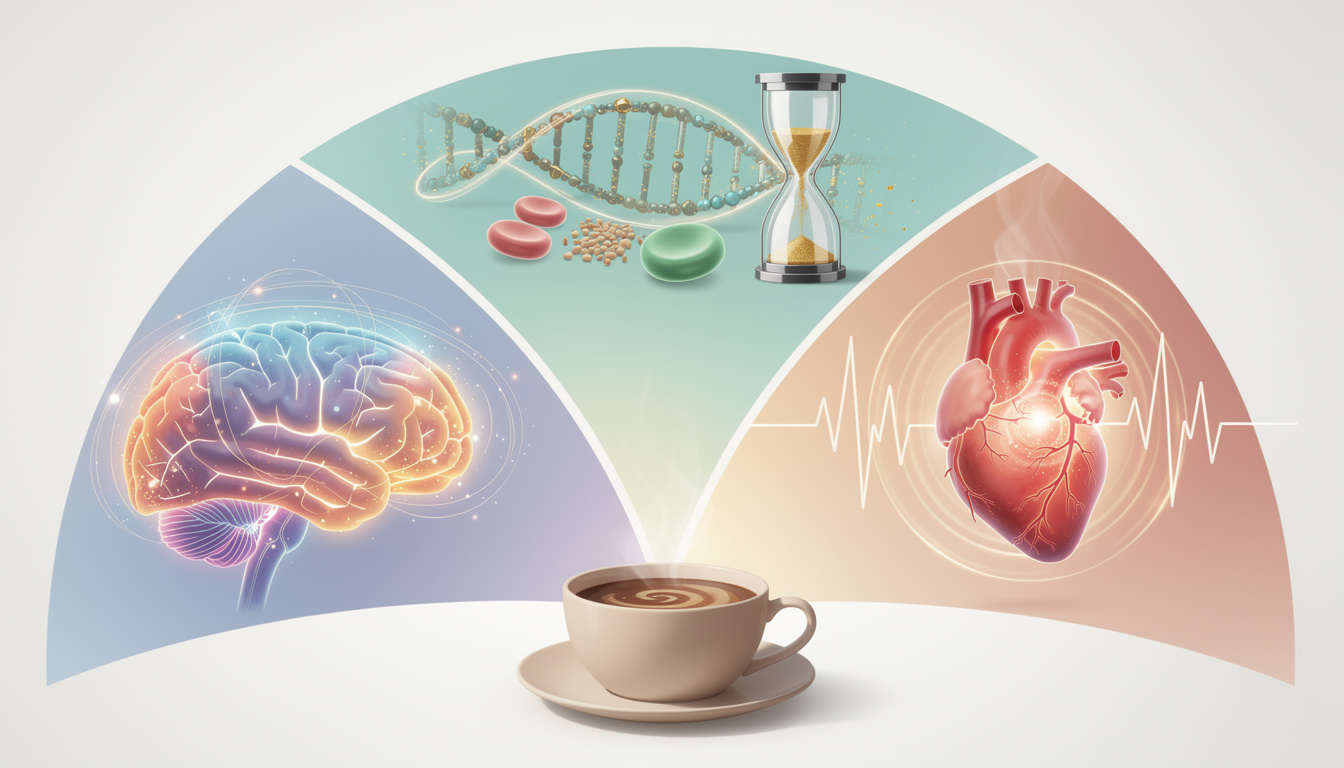
Coffee, a beverage appreciated worldwide, constantly attracts interest both for its flavors and its effects on health. In 2026, scientific research continues to reveal how moderate consumption can influence the brain, the heart, and longevity, with essential nuances to consider for an informed consumption.
How coffee acts on the brain and cognition
The main active component of coffee, caffeine, is recognized for its stimulating effects on the central nervous system. In the hours following consumption, it enhances alertness, concentration, and even memory. Recent studies have confirmed that caffeine promotes neuronal plasticity, especially in the hippocampus, a key area for memory and learning.
These benefits result from modulation of genes and metabolic pathways in brain cells, which improves the brain’s ability to respond to complex tasks. A study conducted on animal models revealed that caffeine acts as a kind of neurological facilitator, strengthening the hippocampus’s response during memory activities, not to mention its protective potential in the case of neurodegenerative diseases such as Alzheimer’s disease.
Optimizing neurological stimulation through moderate consumption
Despite these assets, it is crucial to maintain a certain balance in consumption. Drinking between one and three cups of coffee per day appears to offer optimal cognitive benefits, while beyond this, these positive effects tend to stabilize. Furthermore, the chosen time to enjoy coffee influences the quality of cerebral stimulation. It is advised to consume this beverage between 9:30 a.m. and 11:30 a.m., when the natural level of cortisol, the awakening hormone, begins to decrease in order to fully benefit from caffeine without disrupting this cycle.
Coffee and cardiovascular health: a delicate balance
For a long time, coffee was viewed with suspicion due to its effects on heart rhythm, but recent data offer a more nuanced perspective. Moderate consumption, without excess sugar or added fats, is now associated with a protective effect on cardiovascular health. Indeed, drinking one to two cups of black coffee per day could reduce mortality risk related to heart diseases.
However, individual tolerance must be taken into account. In some people, especially those sensitive to caffeine, the beverage can cause palpitations or an acceleration of heart rate, situations that require vigilance. At the same time, regular physical activity remains an essential pillar to support heart health, as experts remind us.
Consumption and precautions for the heart
It is preferable to avoid coffee after 2–3 p.m., as caffeine has a half-life of 3 to 6 hours, which can negatively impact sleep and consequently cardiac recovery. Coffee should also be consumed black or with little sugar, as adding sweet ingredients could cancel out certain health benefits and even increase some risks.
Drinking coffee for better longevity: what does science say?
An American study conducted on more than 47,000 female participants over a 30-year period highlighted that daily and moderate coffee consumption contributes to a longer life in good health. These women not only lived longer but also exhibited a much better quality of life, without major memory issues or chronic diseases such as diabetes, cancer, or Parkinson’s disease.
Each additional cup consumed daily increased the probability of aging well by 2 to 5%, up to three cups. Beyond that, benefits plateau. It therefore seems that coffee, integrated into a healthy lifestyle including a balanced diet and regular physical activity, participates in an overall protective effect with a positive influence on longevity.
Practical recommendations to maximize benefits
- Consume coffee between 9:30 a.m. and 11:30 a.m. for better absorption and to avoid sleep disturbances.
- Prefer black coffee, without excess sugar or cream, in order to preserve its antioxidant properties.
- Combine with a diet rich in natural antioxidants and engage in regular physical activity to support overall health.
- Avoid coffee on an empty stomach if you are prone to acid reflux or heartburn, an issue to watch especially if digestive troubles are already present, as often discussed in relation to abdominal pain.
| Aspect | Effect of moderate coffee | Precaution |
|---|---|---|
| Brain | Increased alertness, improved memory, enhanced neuronal plasticity | Limit consumption to 3 cups |
| Heart | Protective effect short and long term, possible reduction of cardiovascular risks | Avoid late in the day to not disrupt sleep |
| Longevity | Increase of 2 to 5% probability of aging well per cup up to 3 cups | Do not exceed 3 cups daily |
| Sleep | Good quality if consumption avoided after 2 p.m. | Contraindicated late afternoon and evening |
For more information on the consequences of excessive or poorly adapted consumption, do not hesitate to consult specialized resources to avoid side effects such as insomnia or digestive disorders.
{“@context”:”https://schema.org”,”@type”:”FAQPage”,”mainEntity”:[{“@type”:”Question”,”name”:”Is coffee recommended for everyone?”,”acceptedAnswer”:{“@type”:”Answer”,”text”:”Moderate coffee consumption is generally safe for most people, but it should be avoided or monitored in individuals sensitive to caffeine, especially those suffering from heart disorders or gastroesophageal reflux.”}},{“@type”:”Question”,”name”:”What is the best time to drink coffee?”,”acceptedAnswer”:{“@type”:”Answer”,”text”:”Prefer consumption between 9:30 a.m. and 11:30 a.m. to respect the natural cortisol secretion rhythm, thus avoiding reduced caffeine stimulating effectiveness and sleep disturbances.”}},{“@type”:”Question”,”name”:”Can coffee improve memory?”,”acceptedAnswer”:{“@type”:”Answer”,”text”:”Yes, several studies show that caffeine promotes neuronal plasticity in the hippocampus, which facilitates memorization and may have a protective effect against certain neurodegenerative disorders.”}},{“@type”:”Question”,”name”:”What are the risks of excessive consumption?”,”acceptedAnswer”:{“@type”:”Answer”,”text”:”Beyond 3 cups per day, coffee may cause insomnia, palpitations, heartburn, and reduce its cardiovascular health benefits.”}},{“@type”:”Question”,”name”:”Is black coffee better for health?”,”acceptedAnswer”:{“@type”:”Answer”,”text”:”Drinking black coffee, without sugar or cream, preserves its antioxidants and limits the risk of undesirable effects linked to excessive sugar or fat intake.”}}]}Is coffee recommended for everyone?
Moderate coffee consumption is generally safe for most people, but it should be avoided or monitored in individuals sensitive to caffeine, especially those suffering from heart disorders or gastroesophageal reflux.
What is the best time to drink coffee?
Prefer consumption between 9:30 a.m. and 11:30 a.m. to respect the natural cortisol secretion rhythm, thus avoiding reduced caffeine stimulating effectiveness and sleep disturbances.
Can coffee improve memory?
Yes, several studies show that caffeine promotes neuronal plasticity in the hippocampus, which facilitates memorization and may have a protective effect against certain neurodegenerative disorders.
What are the risks of excessive consumption?
Beyond 3 cups per day, coffee may cause insomnia, palpitations, heartburn, and reduce its cardiovascular health benefits.
Is black coffee better for health?
Drinking black coffee, without sugar or cream, preserves its antioxidants and limits the risk of undesirable effects linked to excessive sugar or fat intake.