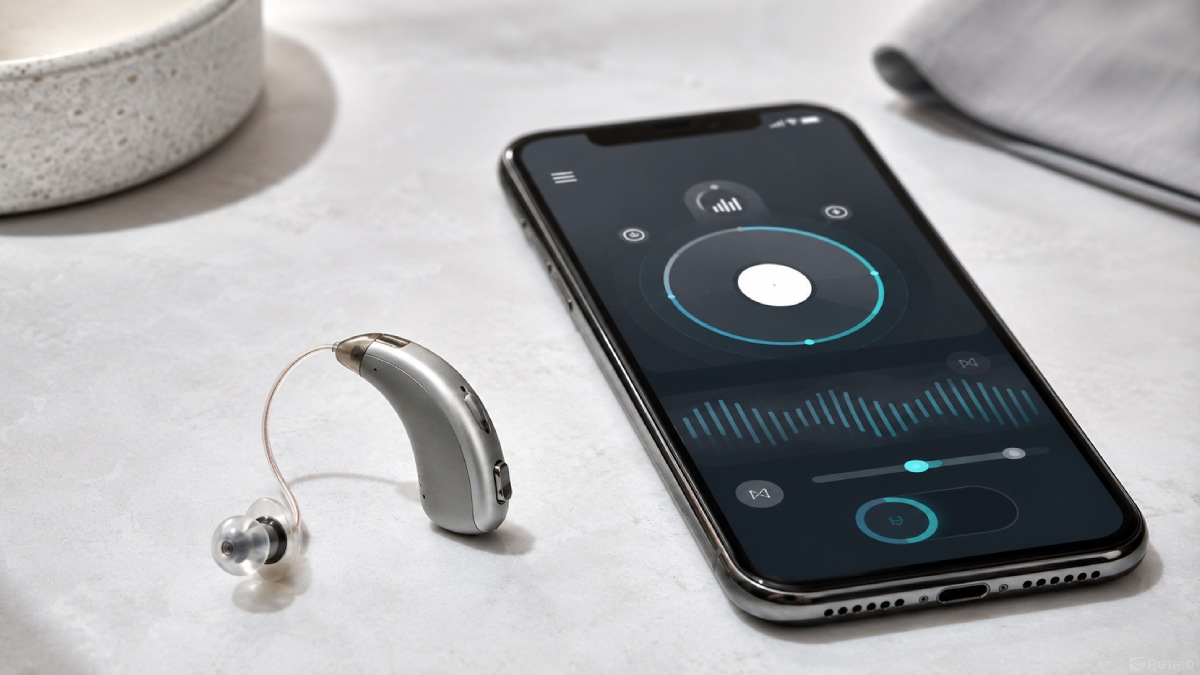
Answering the phone, listening to television or music directly in your ears, adjusting the volume from an app: Bluetooth hearing aids have transformed hearing devices into a true connected object. Far from the image of the old prosthesis, these wireless hearing aids sync with smartphones and the everyday digital environment. Specialized stores like VivaSon now offer them in all brands and all ranges. This guide explains how they work, what they really bring, and the criteria for choosing well.
Disclaimer: this article is informative and does not replace the advice of an ENT doctor or an audiologist. Any fitting must be preceded by a hearing assessment.
What is a Bluetooth hearing aid?
A Bluetooth hearing aid is a digital hearing aid capable of wirelessly communicating with other devices: smartphone, tablet, television, computer, or dedicated accessories. This connectivity adds to its primary function, which remains the correction of hearing loss. Specifically, the prosthesis no longer just amplifies environmental sounds: it also becomes a smart earphone, capable of receiving an audio stream broadcast by another device. Nearly all recent models, whether behind-the-ear, micro-behind-the-ear with remote receiver, or even in-the-ear, now incorporate this technology.
How does wireless connectivity work?
Several protocols coexist, and it is useful to distinguish them before purchasing.
The historical standard is “Made for iPhone” (MFi), which allows compatible hearing aids to receive sound directly from an iPhone, iPad, or Apple Watch. On the Android side, Google developed the ASHA protocol, which provides direct streaming on many recent smartphones, with compatibility still variable depending on the models.
The current major evolution is called Bluetooth LE Audio and its Auracast function. This new standard, gradually being deployed, promises universal connection with lower energy consumption, better sound quality thanks to the LC3 codec, and the ability to capture public audio broadcasts (stations, theaters, equipped waiting rooms). Some recent models already support it, and it should become the norm in the coming years.
Everyday benefits
The interest of a connected hearing aid is mainly measured by concrete everyday uses:
- Phone calls arrive directly in both ears, often hands-free, for significantly improved comprehension.
- Music and podcasts play without additional earphones, with sound calibrated to your hearing.
- Television sound can be streamed via a small adapter connected to the TV, ending the volume being too loud for those around you.
- App control allows you to adjust volume, microphone directionality, or switch programs discreetly from your smartphone.
- Remote fitting allows your audiologist to fine-tune settings remotely, avoiding some visits to the center.
Beyond comfort, this ease of listening helps reduce auditory fatigue and stay fully engaged in family, social, and professional conversations, an essential point for the well-being of hearing aid users.
Behind-the-ear, micro-behind-the-ear or in-ear: what Bluetooth options?
Connectivity exists in almost all formats. Behind-the-ear (BTE) and especially micro-behind-the-ear with remote receiver (RIC) are the most widespread and offer the best battery life. In-ear devices, housed in the canal, are the most discreet: long incompatible with wireless due to lack of space, they now incorporate Bluetooth in some ITE and ITC formats, sometimes even with Bluetooth LE Audio. The choice of format will depend on your hearing loss, dexterity, and aesthetic preferences.
Price and reimbursement: the 100% Health reform
This is a crucial and often misunderstood point. Good news: Bluetooth connectivity does not increase the price by itself. The price of a device depends on its audiological performance level, not its wireless function, which is now almost systematic.
Since the 100% Health reform, hearing aids are divided into two classes:
| Criterion | Class 1 (100% Health) | Class 2 (free prices) |
|---|---|---|
| Price per ear | Capped at €950 | Set freely (often €1,000 to €1,500 and more) |
| Out-of-pocket | €0 with a responsible complementary insurance | Variable, depending on the mutual insurance contract |
| Bluetooth connectivity | Possible | Possible |
Social Security reimburses a base of about €240 per ear for an adult, the remainder being covered by complementary health insurance for class 1 devices. Note: accessories such as the TV adapter, remote control, or remote microphone are generally not included and remain your responsibility. Replacement is covered every four years.
How to choose your Bluetooth hearing aid well?
Connectivity is only one criterion among others. To make the right choice, several elements matter even more: sound processing quality and noise reduction, real compatibility with your smartphone (system and model), streaming battery life, waterproofing if you are active, and of course comfort and discretion. The good reflex is to check compatibility with your phone before any purchase and never buy an accessory online without confirmation from your audiologist. Most stores, including VivaSon, offer a free 30-day trial, ideal for testing the device in your real environments before deciding.
The good reflex
Never choose a hearing aid based solely on the technical sheet. Two models showing the same Bluetooth functions can offer very different understanding in noise. Always start with a hearing assessment by an ENT doctor, then tests with an audiologist who will adapt the range to your actual hearing loss and lifestyle. Connected technology offers great comfort, but it does not replace professional adjustment or the regular follow-up that determines the success of the fitting over time.
Limits to know
A few points deserve your attention. Compatibility with Android smartphones remains more uneven than with iPhones, although the gap is closing. Intensive streaming use consumes more battery, to anticipate if you listen to a lot of content. Connected accessories have an additional cost. Finally, remote fitting is practical but does not replace center follow-up. Connectivity is an undeniable plus, provided it is considered as a complement, not as the main criterion of your decision.
In summary
Bluetooth hearing aids combine hearing correction and digital comfort: streaming calls, music, and television, app control and remote adjustments. Connectivity does not increase the price, which depends on the performance level, and many connected models are eligible for 100% Health with no out-of-pocket cost. For a good choice, the essential remains a serious hearing assessment, a trial in real conditions, and support from an audiologist. Well guided, switching to a connected hearing aid is one of the best investments for daily quality of life.
Sources: 100% Health reform (Health Insurance, ameli.fr), documentation from hearing aid manufacturers and Bluetooth standards (MFi, ASHA, Bluetooth LE Audio / Auracast), as of writing date. Prices, reimbursement levels, and compatibilities evolve, please check up-to-date information with an audiologist and on ameli.fr.