Lingual psoriasis, although little known, can be a significant source of discomfort and questions for those who suffer from it. This chronic inflammatory disorder of the tongue falls within the broader context of psoriasis, an autoimmune disease characterized by an excessive activation of the immune system that causes an accelerated multiplication of skin cells. This hyperactivity leads to the formation of specific oral lesions, often red and scaly, which can disrupt daily life.
While psoriasis essentially affects the skin, its impact on the oral cavity and more precisely on the tongue remains rare and less documented, which makes lingual psoriasis diagnosis all the more delicate. Understanding the manifestations, underlying causes, as well as possible therapeutic options is crucial to better manage this phenomenon.
Understanding the symptoms of lingual psoriasis and their repercussions
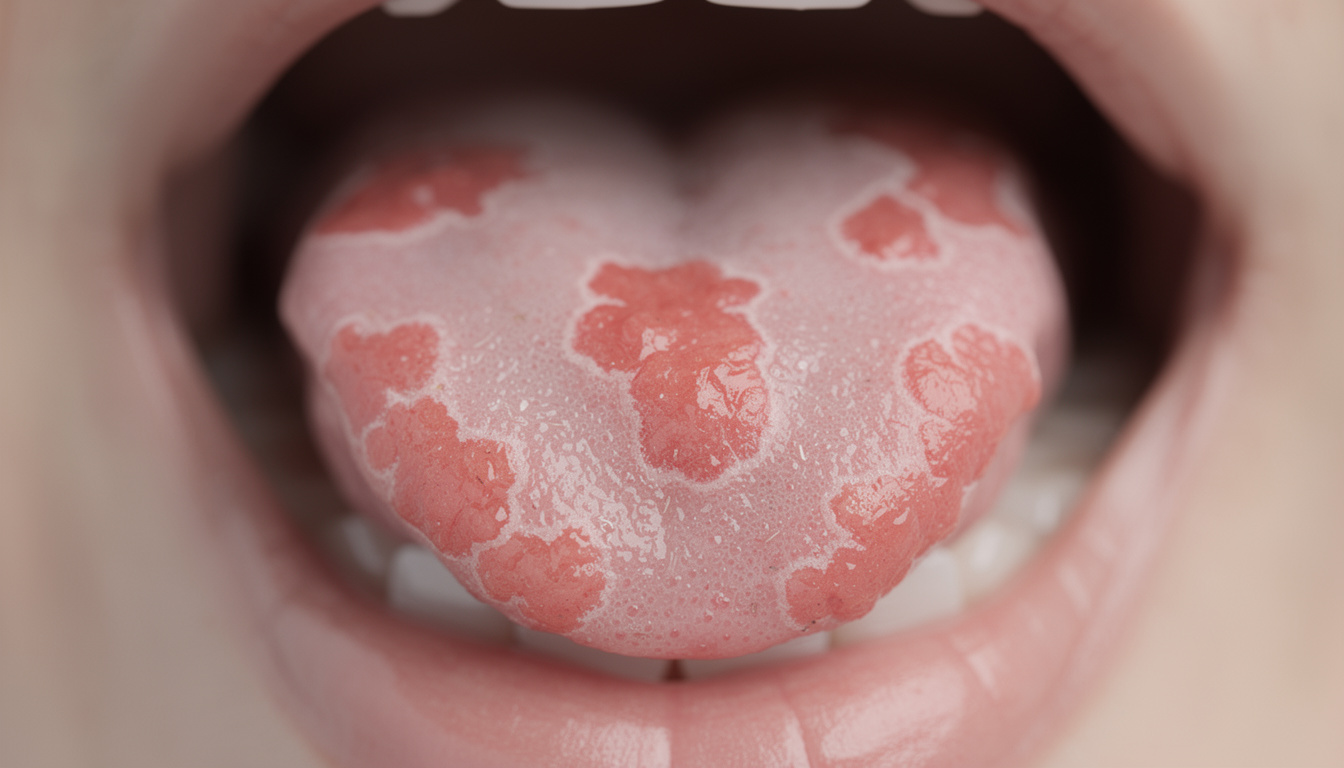
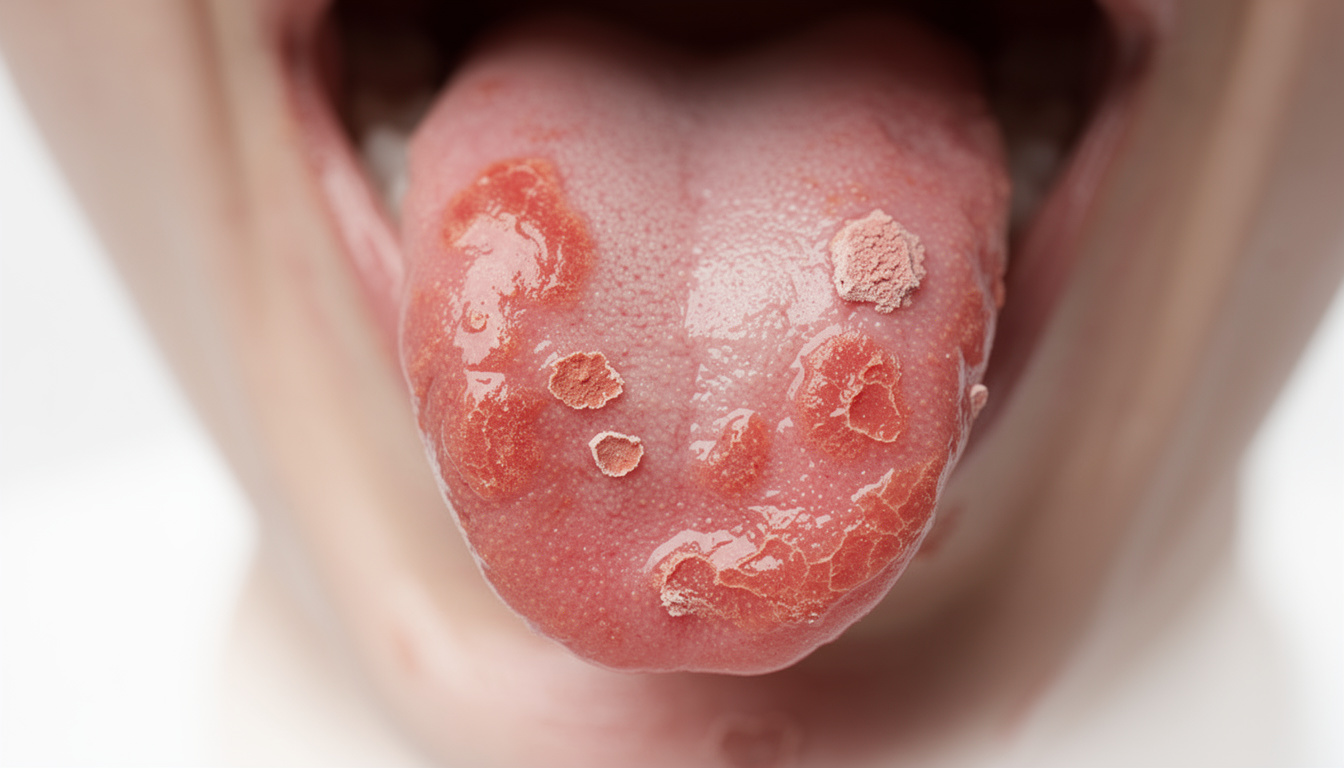
Lingual psoriasis symptoms mainly manifest as red plaques, sometimes covered with white to yellowish scales, appearing on different areas of the tongue, such as the edges and the top. These lesions can, in some patients, cause notable tongue inflammation, which results in a burning or discomfort sensation when chewing, swallowing, or even speaking.
For others, the manifestations remain discreet, which complicates the quick recognition of the disease. It is not uncommon for some patients to notice a change in taste, a sensation of a cracked tongue, or slight swelling. Each of these changes impacts quality of life, especially when they occur during flare-ups of psoriasis activity.
Risk factors and genetics linked to lingual psoriasis
Although the exact cause of psoriasis remains partially mysterious, a strong genetic influence is now established. People with a family history of psoriasis genetics have an increased risk of developing this pathology, both in its cutaneous and lingual forms. It is also observed that certain triggers, such as significant emotional stress, infections, or local trauma, can promote the onset or recurrence of oral lesions.
Lingual psoriasis, as a rare manifestation, is often associated with the presence of psoriasis on other parts of the body. However, it can sometimes present in isolation, thus complicating the diagnostic process for the patient and the practitioner.
Differential diagnosis and the importance of specialized medical follow-up
Lingual psoriasis diagnosis must be made rigorously, as its symptoms can be confused with other oral disorders, such as eczema, leukoplakia, or even certain precancerous forms. For this reason, a thorough examination by a dermatologist or an oral health specialist is recommended. It is common for confirmation to require a biopsy of the lesions to exclude other pathologies and confirm the autoimmune nature of the condition.
Patients are encouraged to report any personal or family history of psoriasis to the healthcare professional. This active collaboration between the patient and the doctor is essential for establishing an adapted and evolving care plan based on flare-ups.

Therapeutic approaches adapted to lingual psoriasis
Lingual psoriasis treatment mainly aims to reduce inflammation and relieve painful symptoms. Depending on the severity of the lesions, several options are possible:
- Topical medications: such as corticosteroids applied locally to reduce redness and scaling.
- Specific mouth rinses, often based on corticosteroids or healing agents to soothe the inflamed mucosa.
- Systemic treatments: in severe forms associated with generalized psoriasis, immunosuppressive or biologic drugs may be prescribed, acting on the body’s overall symptoms.
- Enhanced oral hygiene and care: maintaining impeccable hygiene with appropriate products to avoid irritation can significantly improve comfort.
Each treatment must be personalized and closely monitored, as patient reactions can vary and require regular adjustments.
Practical advice for living daily with lingual psoriasis
Beyond medical treatment, adopting certain lifestyle habits can help reduce the impact of flare-ups and preserve oral health:
- Identify and avoid triggers: stress, certain spicy foods, alcohol, or tobacco can worsen the lesions.
- Maintain adequate hydration: good hydration is key to limiting dryness and irritation of the tongue.
- Use soft toothbrushes and non-irritating mouthwashes to protect the fragile oral mucosa.
- Manage stress through methods such as meditation, yoga, or therapy, as it is a major triggering factor in psoriasis.
- Consult a specialist regularly to adjust treatment and monitor lesion evolution.
These simple but essential actions help to alleviate the symptoms of lingual psoriasis and restore lasting oral comfort.