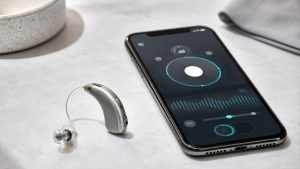
They’re everywhere. Around the wrist, in the pocket, sometimes even as a discreet patch stuck to the skin. Connected health devices have made a dramatic entrance into our daily lives, often on par with our smartphones. But are these little technological marvels simply high-tech gadgets or tools truly capable of transforming the way we experience health?
For the past few years, they’ve become part of our routines: monitoring heart rate during a run, checking oxygen saturation during a winter epidemic, or even being alerted in case of a fall when living alone… These are just some of the features that appeal to an increasingly wide audience, from sporty thirty-somethings to seniors keen to maintain their independence.
Yet, beyond their playful or reassuring appearance, these devices also raise real questions: about the reliability of the measurements, our dependence on data, and the respect for our privacy. So, should we adopt them blindly or use them with informed caution? In this article, we’ll break down the promises (and limitations) of connected health devices together, without jargon, but with a truly critical eye.
Understanding Connected Health Devices
A Definition That Goes Beyond a Simple Gadget
A connected health device isn’t just a trendy, flashing accessory. It’s an electronic device capable of collecting, transmitting, and sometimes analyzing data related to our health or well-being. Simply put, it observes, it measures, and it communicates—with you, your smartphone, or even your doctor.
From Bluetooth blood pressure monitors to watches that detect arrhythmias, and including sensors embedded in orthotic insoles: these devices are no longer content with just measuring; they are gradually becoming integrated into a broader medical ecosystem.
Overview of Embedded Technologies
Behind every connected device lies a veritable mini technological powerhouse. Biometric sensors, accelerometers, gyroscopes, electrodes, GPS, Bluetooth, Wi-Fi, and now, chips equipped with artificial intelligence. That’s quite a lot.
And this is where it gets fascinating: some devices are capable of learning from your behavior. For example, they detect subtle variations in your habits (sleep patterns, physical activity, heart rate) and can alert you to any unusual changes. A form of continuous “digital monitoring,” dedicated to your health. Connected health: what are the links with telemedicine and health data? These devices don’t operate in isolation. In fact, they are an essential component of what is now called
“connected health”: a way to rethink prevention, medical monitoring, and care coordination through digital tools.
By connecting their data to a secure platform or application, certain devices allow healthcare professionals to remotely monitor a patient’s progress, adjust treatment, or detect problems early. This is known as remote monitoring, or even predictive medicine.
- But this also raises a thorny issue: the management of personal health data. Who has access to it? How is it stored? This is a topic that cannot be ignored… and one we will explore further. What are the most widely used connected health devices today?
- For individuals: everyday allies These are the devices most often found in our bathrooms or on our wrists. They integrate into our routines with surprising ease, promising fully autonomous health monitoring.
- Activity watches and bracelets: They measure steps, heart rate, sleep, and sometimes even stress or oxygen saturation. Some models can even detect falls or heart rhythm disturbances.
- Connected blood pressure monitors: Useful for people with hypertension, they transmit data directly to an app, or even to a doctor.
- Smart thermometers: No more scribbling in a notebook; everything is recorded automatically, with easy-to-read graphs.
Pulse oximeters and pocket ECGs:
Small devices capable of measuring oxygen saturation or performing a quick electrocardiogram at home.
More unusual gadgets:
- Scales that analyze body composition, toothbrushes that evaluate your brushing technique, glasses that detect eye strain, and even skin patches that analyze your perspiration! As you can see, innovation is everywhere, often where you least expect it. And sometimes, it has to be said, it borders on the gimmicky. Hence the importance of choosing wisely (more on this later).
- In the medical field: tools for therapeutic monitoring
- Healthcare professionals are not lagging behind. Numerous connected devices have appeared in doctors’ offices, hospitals, and home healthcare services. Their goal? To make care more responsive, more personalized, and sometimes less intrusive. Remote monitoring sensors:
- Placed on a patient at home, they automatically send vital data to the doctor or nurse. This is useful for avoiding unnecessary hospitalizations. Alert devices for the elderly:
Fall detection, abnormal inactivity, or geolocation in case of wandering (particularly for Alzheimer’s patients).
Devices for rehabilitation or neurology:
Some sensors track motor progress after a stroke, while others measure tremors in Parkinson’s disease.
Connected devices for chronic conditions:
For example, blood glucose meters that automatically transmit results to the endocrinologist.
So, these are far from being simple “gadgets.” Within a well-defined medical framework, these devices can become invaluable tools for better care… provided, of course, that they are used correctly.
What are the concrete uses of these devices for our health?
Prevention and self-monitoring: better self-awareness for better action
Imagine being able to detect a health problem before symptoms even appear. This is exactly what some connected devices allow. They offer a kind of “inner mirror” by continuously monitoring signs that are sometimes imperceptible.
For example, an unusual variation in resting heart rate, recurring sleep disturbances, or a slightly lower than usual oxygen level… These small deviations, if detected early, can prompt an earlier consultation. And in some cases, preventing the worst.
Another significant benefit: empowerment. By visualizing our health data, we better understand the impact of our daily choices. A form of digital self-coaching, which can motivate us to walk more, sleep better, or reduce our salt intake. Chronic disease monitoring: a discreet but powerful ally
Connected devices become truly valuable for monitoring long-term conditions. Diabetes, hypertension, COPD, sleep apnea, heart rhythm disorders… these are all conditions where regular and accurate monitoring makes all the difference.
A concrete example: continuous glucose monitors that alert in case of hypoglycemia, or CPAP machines for sleep apnea that automatically adjust according to sleep patterns. These tools, once reserved for hospitals, are becoming accessible at home, offering greater comfort… and often, better adherence to treatment.
Improving the patient-caregiver relationship: a new way of communicating
Far from replacing the doctor, connected devices can enrich the therapeutic relationship. Thanks to secure data transmission, caregivers can adjust treatment, detect deviations, or simply better understand their patient’s daily life between appointments.
And this isn’t just a dream: in some hospital departments, data collected by connected devices already allows for prioritizing appointments or anticipating a deterioration. A true tool for proactive prevention, transforming the traditional model of “I go to the doctor when things get bad.”
But be warned: the patient must agree to share their data, and the healthcare professional must have the time (and resources) to analyze it. The human element remains central to the equation.
Concrete benefits: what can we really expect?
Gained autonomy for patients
For many, these devices represent a newfound freedom. Being able to monitor one’s health from home, at any time, without constantly needing a doctor’s appointment, is a real comfort… and sometimes a relief.
This is especially true for the elderly or those with chronic illnesses. With a blood pressure monitor or a fall detector, they can stay at home longer, while feeling reassured—both they and their loved ones. This is what is called “assisted home care,” and connected devices are playing an increasingly important role in it.
More personalized, more precise medicine
These devices don’t just collect data: they allow us to observe long-term trends. And that changes everything. Instead of a static snapshot of your health (like during a consultation), they offer continuous video.
The result? More tailored treatments, a better understanding of symptoms (which can sometimes fluctuate), and the ability to prevent certain complications before they occur. This is what we call “predictive” or “personalized” medicine, still relatively uncommon, but rapidly growing.
A daily motivational tool
Let’s face it: seeing a graph display your progress or receiving a notification that says “Well done, goal reached!” can boost our morale. These devices act a bit like a digital coach: they motivate, encourage, and get you going again when you get stuck in a rut.
Some even go further by integrating games, virtual rewards, or community challenges. And if it can encourage you to take an extra 1,000 steps or breathe deeply three times a day, why not? As long as it remains fun… and the pressure doesn’t become overwhelming.
But beware: digital motivation has its limits. If it isn’t accompanied by genuine awareness or medical monitoring, it can quickly lose its effectiveness. Like a gym membership you end up forgetting…
The limits and controversies surrounding connected health devices
Data reliability: can we really trust it?
A number is good. But a reliable number is better. And here, not all connected devices are created equal. Some are certified as medical devices, others are not. As a result, the accuracy of a watch sold in supermarkets and a clinically validated sensor can vary by a factor of two.
Even with a good device, measurement conditions matter: ambient temperature, body position, emotional state… all these factors influence the data. It’s no coincidence that doctors always cross-reference several indicators before making a diagnosis. Connected devices, however, don’t yet have this level of precision.
Data privacy and security: a hot topic This is the crux of the matter. Because these devices, in addition to capturing intimate data (heart rate, geolocation, sleep quality…), often send it to servers via the internet. Where does it go? Who has access to it? How is it protected?
Some manufacturers guarantee secure storage, while others remain vague on the issue. And in any case, there’s always a risk of hacking or misuse. The idea of your health insurance company having access to your stress or physical activity data is chilling, isn’t it? Fortunately, regulations exist in France—such as the GDPR or HDS certification for hosting health data. But consumers often don’t see the point. Hence the importance of carefully reading the terms of use… or choosing transparent manufacturers.
Sometimes exaggerated promises: between motivation and placebo effect Some devices promise the moon and the stars: “stress reduction,” “guaranteed better sleep,” “stroke prevention”… Really? The reality is often more nuanced. While some functions have a solid scientific basis, others are primarily marketing ploys. The risk? Mistakenly believing you’re “healthy” because your watch displays a pretty graph. Or worse: delaying a consultation because “the app didn’t detect anything.” It’s crucial to remember that a connected device remains a tool. Useful, yes, but to be used with discernment.
A worrying digital divide.
- These technologies require a minimum level of knowledge, a smartphone, an internet connection… and sometimes even a significant budget. However, a portion of the population—particularly the elderly or those living in precarious situations—does not always have access to these tools. As a result, there is a real risk of creating a two-tiered healthcare system. Those who can monitor themselves in real time… and those who cannot. A digital divide that sometimes intersects with social divides. And one that deserves to be taken seriously in public health policies.
- Choosing the right connected health device: our practical advice Before buying: ask yourself the right questions
- Before succumbing to the latest €300 watch or a bracelet that “promises to relax you,” ask yourself a simple question: What for?
- Is it to monitor a health parameter already being monitored by a doctor? To improve your lifestyle? To reassure your loved ones? By clarifying your needs, you will avoid buying a gadget that will end up at the bottom of a drawer. And above all, you’ll be able to choose a device truly suited to your daily life (and not one that’s just for Instagram ads).
- Another often-overlooked point:
Are you prepared to check your data regularly?
Some devices require a bit of personal involvement. If you don’t want to be constantly “connected,” perhaps a simpler (or even unconnected!) tool would be more appropriate.
- Essential criteria to consider: Medical certification:
- For devices that handle vital data (blood pressure, ECG, blood sugar, etc.), check if they have a medical CE marking or are clinically validated. This guarantees a minimum level of reliability. Data readability:
- Overly complex graphs or poorly translated interfaces can quickly become discouraging. Prioritize ease of use. Compatibility:
Make sure the device works well with your phone (iOS, Android, etc.) and that the app is regularly updated.
Battery life and charging:
Some devices need to be charged daily, while others last for several weeks. This can make all the difference in the long run.
Data protection:
Choose brands that clearly communicate their privacy policy. A bonus: apps hosted on HDS-certified servers.
Common mistakes to avoid: It’s easy to be seduced by a great marketing promise or an elegant design. But beware of these pitfalls:Confusing well-being with medical care:
A watch that tracks your sleep is not a sleep apnea diagnosis. An “anti-stress” bracelet is not a substitute for medical treatment.
Overloading your daily life:
Too many devices, too many notifications, too many numbers… can end up generating the opposite effect: stress, guilt, or even obsession. Don’t involve your doctor:
If you use a device to monitor a medical parameter, inform your healthcare provider. They will be able to better interpret the results… and avoid false alarms. In short? A small device used correctly is better than a powerful but misunderstood one. As is often the case, simplicity works wonders.
The future of connected health devices: towards predictive health?
- Artificial intelligence and self-learning devices This is no longer science fiction. Many connected health devices already incorporate algorithms capable of learning from your data. The more you use them, the more accurate they become—a bit like a doctor who knows you well. This is known as machine learning applied to healthcare.
- An example? Some watches analyze your micromovements during sleep to detect apnea or predict periods of fatigue. Others cross-reference your heart, respiratory, and temperature data to anticipate a fever or even an emerging infection. Ultimately, the goal is clear:
- to detect illnesses before they manifest.
- A fascinating field… but also a sensitive one, as it touches on the very biological intimacy of each individual. Towards an augmented… or outdated doctor? Far from replacing healthcare professionals, these tools could become their best allies. Thanks to a continuous view of the patient’s condition, they offer a more comprehensive, more nuanced perspective, and above all, one less dependent on subjective statements (“I’ve been in pain since yesterday… or at least I think so”).
Some hospital departments are already equipping themselves with platforms capable of aggregating data from hundreds of patients remotely, with alerts in case of anomalies. This allows for faster prioritization, anticipation, and adjustment of treatments. But one question remains:
How far will we let algorithms guide our medical decisions?
Because the line between a helpful tool and a prescribing tool is thin… and vigilance is essential.
What innovations should we be watching for by 2030?
Invisible sensors:
Integrated into clothing, contact lenses, or even the skin, they could collect data continuously, without any interaction required.