In the heart of our hyper-connected age, e-health is slowly but surely establishing itself as a major ally in our well-being. More than just a trend, it is revolutionizing habits, redefining the role of healthcare professionals, and inviting each of us to become an active participant in our own health. Whether it’s receiving remote monitoring, using connected devices to better understand our bodies, or benefiting from a more refined diagnosis thanks to artificial intelligence, this digital revolution emphasizes proximity, personalization, and efficiency. With over 78% of hospitals in France having already adopted these technologies, and telemedicine experiencing exceptional growth since the pandemic, the question is no longer whether we should be part of it, but how to seize all the opportunities it offers.
Key takeaways:
- Over 42% of patients with chronic illnesses now benefit from e-health solutions. Teleconsultations have increased by 400% since the health crisis, facilitating access to care, particularly in isolated areas.
- Innovations such as artificial intelligence and connected devices enable predictive and personalized medicine that is more efficient and less expensive.
- Platforms like Doctolib, Qare, and Maiia are now part of the daily lives of patients and healthcare professionals.
- E-health is transforming the doctor-patient relationship, making it closer, more fluid, and tailored to individual needs.
- How e-health is revolutionizing our access to healthcare
Sometimes, simply imagining the situation of Élodie, a young mother living in a rural area, is enough to understand the tangible impact of e-health. Before, she had to travel more than 30 minutes to see a doctor, juggling her busy schedule. Today, thanks to services like Qare or Maiia, she can book an appointment in just a few clicks, benefit from a teleconsultation, and even have her treatment monitored from home. This ease of access is a game-changer, especially for the 8 million French people who live in areas with limited access to healthcare.
The 2020 pandemic was a real catalyst. In one week, teleconsultations jumped from 40,000 to over one million. This surge reveals how deeply this technology has become ingrained in our practices, with no less than 78% of hospitals equipped to offer this option. But beyond the numbers, it is the relief felt by patients that is truly remarkable. Imagine a patient with a chronic illness followed by a service like Savanedo or MesDocteurs, who can now avoid frequent and stressful travel while remaining closely monitored.
- The tangible benefits of teleconsultation:
- Cost reduction: A teleconsultation costs approximately 30% less than a traditional visit, including ancillary fees.
- Continuous monitoring: Digital tools allow doctors to monitor vital signs in real time, offering personalized follow-up.
- Humanized care: Paradoxically, physical distance sometimes encourages patients to express themselves more freely and honestly, particularly in mental health. Enhanced prevention: Platforms provide automated reminders for checkups and vaccinations, thus improving overall prevention.
This digital transformation also perfectly addresses current challenges, such as the rise in chronic diseases. It ushers in an era of more agile medicine, where the patient becomes an active participant with the ongoing support of healthcare professionals.
| Advantages | Impact on the patient | |
|---|---|---|
| Example of application | Easy access | Quick consultation, avoids long journeys |
| Doctolib, Qare | Personalized follow-up | Treatment adjustments over time |
| Savanedo, MesDocteurs | Reduced cost | Savings on ancillary expenses |
| Maiia, Téladoc | Improved prevention | Automated reminders and alerts |
Lifen, Doovision
Connected devices: when technology becomes part of our daily lives to improve our health
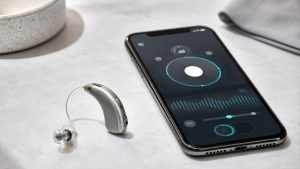
If you walk through an ordinary French city, you’ll almost certainly see someone with a smartwatch, a blood pressure monitor, or a smart glucometer. These small devices, sometimes sold for just a few tens of euros, are actually true sentinels of our health. By 2025, the global market for connected health devices is projected to exceed 350 million units sold, demonstrating the widespread enthusiasm.
- What’s the point of all these gadgets? Their value lies in their ability to empower us while simultaneously facilitating the work of healthcare professionals. These tools not only remind us to exercise and get enough sleep, but they also collect vital data in real time. The benefits are quickly apparent, particularly for patients with diabetes or hypertension. For example, a patient equipped with a connected blood pressure monitor can see their blood pressure decrease significantly thanks to precise monitoring, thus avoiding serious complications.
- The range of connected devices and their uses: Smartwatches: heart rate monitoring, atrial fibrillation detection, sleep tracking (e.g., Withings).
- Connected blood pressure monitors Blood pressure monitoring and cardiovascular risk prevention.
- Connected glucose meters: Improved blood glucose management for diabetics. Connected scales: Body analysis, weight management support, and prevention of eating disorders.
- Sleep trackers: Data on sleep quality and cycles, essential for adapting your lifestyle. Device
| Measured parameter | Accuracy | Health impact | Smartwatch |
|---|---|---|---|
| Heart rate, arrhythmias | 98% | Early detection of atrial fibrillation | Connected blood pressure monitor |
| Blood pressure | 95% | 15 mmHg decrease over 6 months | Connected glucose meter |
| Blood glucose | 99% | 1.2% improvement in HbA1c in diabetics | Manufacturers like Withings and the majority of CE-certified medical products now guarantee the reliability and security of the data collected. The democratization of these technologies has also awakened a strong need for education, which services like Doctolib and Lifen support through practical guides and personalized advice. |
Artificial intelligence: an irreplaceable companion for diagnosis and prevention
We sometimes imagine artificial intelligence as a cold machine, but in the medical field, it is becoming a true extension of the human brain, helping to decode unimaginable volumes of data. Recent advances in medical AI offer impressive accuracy. For example, for certain cancers, AI-powered diagnosis now surpasses the performance of traditional radiologists, with a reliability rate reaching 94%.
In medical imaging, Google DeepMind and Microsoft are developing tools capable of detecting various pathologies with impressive sensitivity, paving the way for significantly more predictive medicine. By combining genetic, environmental, and behavioral data, algorithms anticipate risks well before the onset of the first symptoms, revolutionizing prevention.
- Key Benefits of AI in the Healthcare System
- Increased Accuracy: Early and more precise disease detection.
- Reduced Errors: A 40% decrease in diagnostic errors. Resource Savings: A 25% reduction in unnecessary tests.
- Support for Healthcare Professionals: Diagnostic tools that help better guide patients.
- Automated Dialogue: Medical chatbots for efficient initial triage of requests. Functionality
| Description | Example | Assisted diagnosis |
|---|---|---|
| Analysis of complex medical images | Cancer detection using Google DeepMind | Predictive prevention |
| Anticipation of individual risks | IBM Watson Health and the risk of heart failure | Medical chatbots |
| Patient triage and symptom assessment | Hospital platforms supervised by professionals | The increasing integration of AI into routine practice is impressive: already, 45% of radiology departments in France are using these technologies to refine their diagnoses. This technology gently humanizes medicine instead of dehumanizing it, which reassures both practitioners and patients. |
Teleconsultation, AI, connected devices: which platforms should you choose to fully benefit from e-health?
In this avalanche of tools and applications, it can seem complicated to find your way around. Yet, some platforms stand out as essential. Doctolib, known for its user-friendliness, facilitates medical appointments and integrates teleconsultation features. Qare focuses on a service accessible at any time, particularly appreciated for remote specialist consultations. Maiia distinguishes itself with its comprehensive approach, combining appointment booking with teleconsultations and continuous monitoring via connected devices. Lifen works behind the scenes for the secure exchange of medical data between professionals and improves care coordination. For specialists, Téladoc offers international consultations, bringing diverse expertise at your fingertips.
Criteria for choosing the right e-health platform:
Data security:
- Confidentiality is essential; prioritize certified platforms. Ease of use:
- 1Intuitive interface for all ages.
- 2 Number and quality of services:
- Teleconsultation, remote monitoring, personalized advice.
- Interoperability: Ability to connect to other tools or medical records (Lifen, for example).
| Responsive customer service: Support and assistance to resolve any issues. | Platform | |
|---|---|---|
| Strengths | Features | Doctolib |
| User-friendly interface, large network of practitioners | Teleconsultation integration and reminders | Qare |
| 24/7 accessibility, diverse specialties | Consultations at any time | Maiia |
| Complete multi-service solution | Continuous connected monitoring | Lifen |
| Care coordination, data security | Interoperability with hospitals | Téladoc |
International expertise
Comprehensive remote consultations
Thanks to these services, e-health becomes a true link between the patient and the healthcare system, reducing barriers, personalizing the care pathway, and offering a better quality of life.
Challenges and Prospects of eHealth for Sustainable Well-being
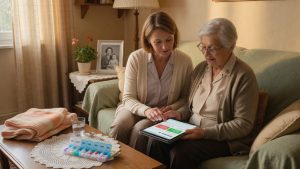
eHealth holds immense promise, but it is not without challenges that must be anticipated to ensure its collective success. One of the main challenges is the digital divide. Despite the omnipresence of digital tools, a portion of the French population, particularly the elderly or those in precarious situations, remain disconnected from these technologies. Providing appropriate training and simplified interfaces is therefore a priority.
The protection of medical data is another crucial issue. The increasing exchange of information via platforms such as Lifen or Doovision must absolutely guarantee the confidentiality and security of sensitive information, while remaining compliant with regulatory requirements.
- Finally, while technology facilitates autonomy, it must never replace the human touch that enriches healthcare. Professionals must therefore be trained in these tools to make them allies, not obstacles, to the patient-physician relationship. Possible directions for the future
- Increased training for patients and caregivers in digital tools.
- Development of inclusive applications adapted to the specific needs of vulnerable populations.
- Strengthening of legislation on the protection of health data.
- Gentle integration of technologies into traditional care pathways.
| Implementation of mechanisms | to analyze the real impact of e-health on public health. | Challenge |
|---|---|---|
| Potential consequence | Proposed solution | Digital divide |
| Exclusion of the elderly or those in precarious situations | Simplified training and tools | Data security |
| Risks of data leaks or theft | Stricter certifications and legislation | Human interaction |
Potential dehumanization of care
Professional training and support
To avoid missing out on this beneficial revolution, we must welcome these innovations with curiosity but also vigilance. E-health is not an end in itself, but a powerful means to sustainably improve our well-being, relying on both human interaction and technology.
Is e-health accessible to everyone?
E-health is progressing rapidly, but some populations remain excluded. Efforts in training and simplifying tools aim to broaden access.
How can I ensure the security of my personal data?
Reputable platforms like Lifen or Doovision adhere to strict standards and use encryption technologies to protect your information.
Can teleconsultation replace an in-person consultation?
While not suitable for all situations, teleconsultation is a valuable complement, especially for regular monitoring and initial diagnoses.
Are connected devices reliable? Devices sold with CE medical certification, such as those from the Withings brand, guarantee high reliability and data security.
Will artificial intelligence replace doctors?