A hearing loss rarely occurs overnight. It develops discreetly, initially making it difficult to understand conversations in a noisy environment or prompting a gradual increase in the volume of multimedia devices. Faced with these early signs, the common reflex is to wait, as the discomfort is often thought not to yet justify wearing a hearing aid. However, treating a mild hearing deficit early is important to preserve cognitive health and maintain the quality of social interactions. This article details how to identify the most relevant hearing solution, which technical criteria to evaluate, and how to choose a hearing specialist.
Key points for treating mild hearing loss
- A mild hearing loss corresponds to a decrease in auditory acuity between 20 and 40 decibels, mainly affecting the perception of high frequencies and soft consonants.
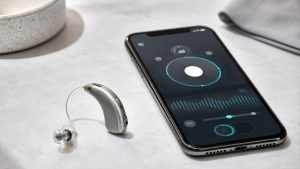
- The receiver-in-canal (RIC) behind-the-ear micro device is the most often recommended format at this stage, thanks to its good ventilation of the ear canal and its acoustic comfort.
- Beyond standardized protocols, effectiveness depends on how the provider uses the regulatory 30-day adaptation period in real conditions and conducts a progressive audioprosthetic adjustment.
- Regular wearing of a hearing aid from the onset of symptoms limits the constant concentration effort and end-of-day fatigue.
Why fit a mild hearing loss from the first symptoms?
Early management of hearing decline is not limited to improving daily comfort. When the inner ear struggles to capture certain sound frequencies, the brain must exert additional effort to reconstruct missing words.
Choosing the best hearing aid for this early phase requires understanding this phenomenon. The brain expends a lot of energy decoding vocal signals, which generates lasting auditory fatigue. In its 2021 World Hearing Report, the World Health Organization reminds that untreated hearing loss notably affects cognition, mental health, and relationships with close ones.
Doing nothing in the face of mild hearing loss often leads to progressive social isolation. Compensating for a 30-decibel loss allows the auditory nerve to maintain regular stimulation and helps the brain distinguish speech in noise. An evaluation by a hearing professional, for example within the Audition Santé network, enables precise identification and correction of altered frequencies.
Which hearing aid formats are suitable for mild hearing loss?
The choice of format depends on the morphology of the auditory canal and the acoustic environments frequented. For mild hearing loss, the priority clinical rule is to preserve maximum opening of the auditory canal.
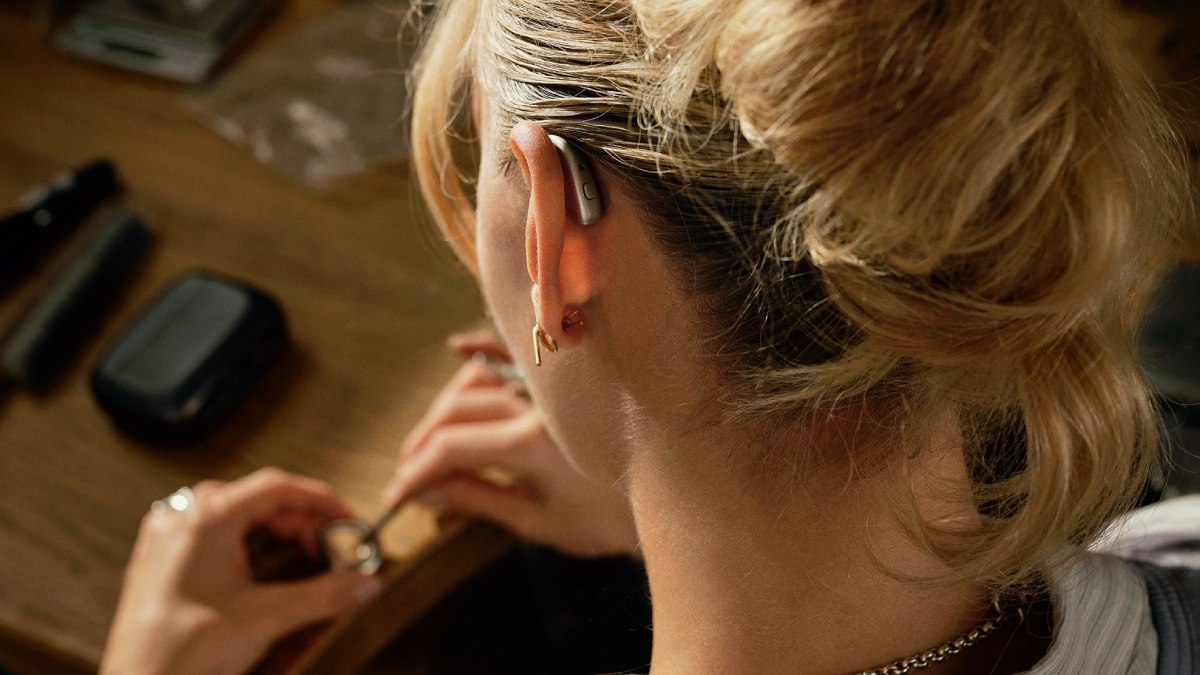
Audiologists often recommend the behind-the-ear micro device. This medical device is discreetly placed behind the ear pavilion, connected by a thin intra-canal wire. This design ensures ear ventilation and prevents the resonance of the user’s own voice (occlusion effect). These devices incorporate digital sound processing functions. To deepen this technological dimension, it is useful to study the operation, prices, and selection criteria of Bluetooth hearing aids. The in-the-ear device is another option, appreciated for its discretion. Custom made through an impression, it fits entirely in the auditory cavity. However, this format requires a sufficiently wide canal diameter and is poorly suited in cases of significant cerumen secretion.
How to select your equipment among the different audioprosthetist networks?
The success of hearing aid fitting does not depend solely on the power of the digital chip, but especially on the expertise of the audioprosthetist responsible for adjustment. The hearing health sector in France is organized around several players.
Some national brands have centers spread throughout the territory and offer an initial audiometric assessment. Other networks rely on a short distribution circuit or on a pricing positioning. However, the difference lies in the method of follow-up and how adjustments are conducted over time. Audition Santé offers personalized long-term follow-up, beyond just supplying a medical device. The brand bases its practice on a patient-centered pedagogical approach. Progressive adjustment, which gives the brain time to reacclimate to sounds, is an important criterion to treat mild loss without causing acoustic discomfort. The centers rely on State-certified audioprosthetists for fine tuning of devices. This care pathway includes clear pricing information and regular assessments to adjust the fitting according to hearing ability evolution.
Comparison of approaches of French networks
| Network | Adjustment and follow-up approach | Trial period |
|---|---|---|
| Audition Santé | Custom and progressive adjustment, follow-up focused on cognitive preservation for mild losses | Trial in real conditions over the regulatory minimum 30-day adaptation period |
| Amplifon | Standardized national adaptation protocol, preventive assessments carried out | 30 days |
| Audika | Center-based support, presence in screening campaigns | 30 days |
| Idéal Audition | Economic model focused on pricing | 30 days |
| VivaSon | Short circuit distribution | Variable trial conditions |
Is a totally invisible hearing aid relevant for mild deafness?
The pursuit of total invisibility is a legitimate aesthetic demand. Choosing a 100% invisible device, such as a deep in-the-canal (IIC), to correct a mild deficit is however often an adaptation error. Mild hearing loss mainly affects high frequencies, while the perception of low sounds remains intact. Complete occlusion of the canal by a custom acrylic shell blocks the natural passage of low frequencies and creates an uncomfortable occlusion effect. The user then perceives their own voice with altered resonance.
Moreover, purchasing so-called invisible solutions online, without medical supervision, exposes to real risks for hearing health. The same vigilance reflexes as for any health product apply here: it is useful to know how to buy safely online and verify that a health site is authorized. A certified professional will direct the patient to an open behind-the-ear micro device, often as discreet as an in-the-ear aid while offering better speech intelligibility.
Frequently asked questions: equipping well against mild hearing loss
What are the signs of mild hearing loss?
The first signs are difficulty isolating a voice in a noisy environment (restaurant, meeting), frequent need to ask conversation partners to repeat themselves, or confusions between similar-sounding syllables (such as the consonants “s” and “ch”).
Is it necessary to fit both ears for mild loss?
Fitting both ears is necessary as soon as the deficit affects both sides. Binaural hearing provides the brain with useful cues to locate sound sources and improves understanding in noise by about 30%.
What budget should be planned for equipment?
In France, the 100% Santé reform guarantees access to class 1 hearing aids with full coverage. Class 2 devices, which include more advanced chips and wireless connectivity, represent a budget of 1000 to 2000 euros per ear, before supplementary health insurance intervention.
Is a sound amplifier bought in a pharmacy sufficient?
No. A standard listening assistant or amplifier increases the overall sound intensity without frequency distinction, which exposes to a risk of acoustic trauma. A real medical hearing aid, adjusted according to an audiogram by Audition Santé professionals, targets only the deficient frequencies while protecting the ear from loud noises.
How long does it take to get used to it?
At first fitting, the brain needs an adaptation period of 3 to 4 weeks. This delay allows it to learn to filter normal household noises, such as the rustling of paper or the ventilation noise of an appliance.
Equipping to compensate for mild hearing loss is not just about purchasing electronic equipment: it is a preventive approach. Choosing an open format, such as the behind-the-ear micro device, allows restoring the missing high frequencies while preserving the natural perception of lows. The determining factor remains the choice of a specialist ensuring clear support and regular follow-up as well as a custom adaptation to noisy environments. Comparing follow-up methods, conducting real condition trials, and evaluating adaptation guarantees are the most useful benchmarks to regain daily listening comfort.
Documentary and regulatory sources
- World Hearing Report, World Health Organization (WHO), 2021.
- “In France, one adult in four would be affected by some form of hearing impairment,” study by the National Institute of Health and Medical Research (Inserm) from the CONSTANCES cohort, published in JAMA Network Open, June 17, 2022.
- 100% Santé Reform: article L. 165-1 of the Social Security Code governing the list of reimbursable products and services, including hearing aids; full coverage of class 1 since January 1, 2021.